If you are planning a DIY sauna, it is natural to compare a custom sauna kit with lumber from a local building-supply store. At first, big-box boards can look like the lower-cost option. The difference often shows up later, when you begin sorting, cutting, fitting, trimming, and trying to make general-purpose material perform inside a high-heat room.
A sauna asks more from wood than most home projects. Every board has to handle heat, moisture, expansion, contraction, and regular contact with bare skin. That is why the true cost of quality is not measured by the cheapest board on the shelf. It is measured by how well the materials install, how comfortably they perform, and how long the finished sauna holds up.
The Cheapest Board Is Not Always The Lowest-Cost Sauna Material
The price on the shelf is only one part of the cost. When you build a sauna, you also pay for sorting, cutting, fitting, trimming, waste, delays, and the long-term performance of the finished room.
Big-box lumber can make sense for many home projects, but a sauna is a demanding environment. If boards are warped, knot-heavy, inconsistent, rough, or unsuitable for high heat, the savings can disappear quickly. You may need to buy extra material, reject imperfect boards, make more cuts, or spend additional time trying to create a clean interior finish.
The lowest-cost sauna material is the material that performs correctly once it is installed. It should fit cleanly, feel comfortable to the touch, handle repeated heat cycles, and help the room look and function the way a traditional sauna should.
When you compare loose lumber with a sauna kit, compare the full project cost rather than the board price alone. A better material package can reduce waste, simplify installation, and help avoid the cost of fixing problems after the sauna is built.
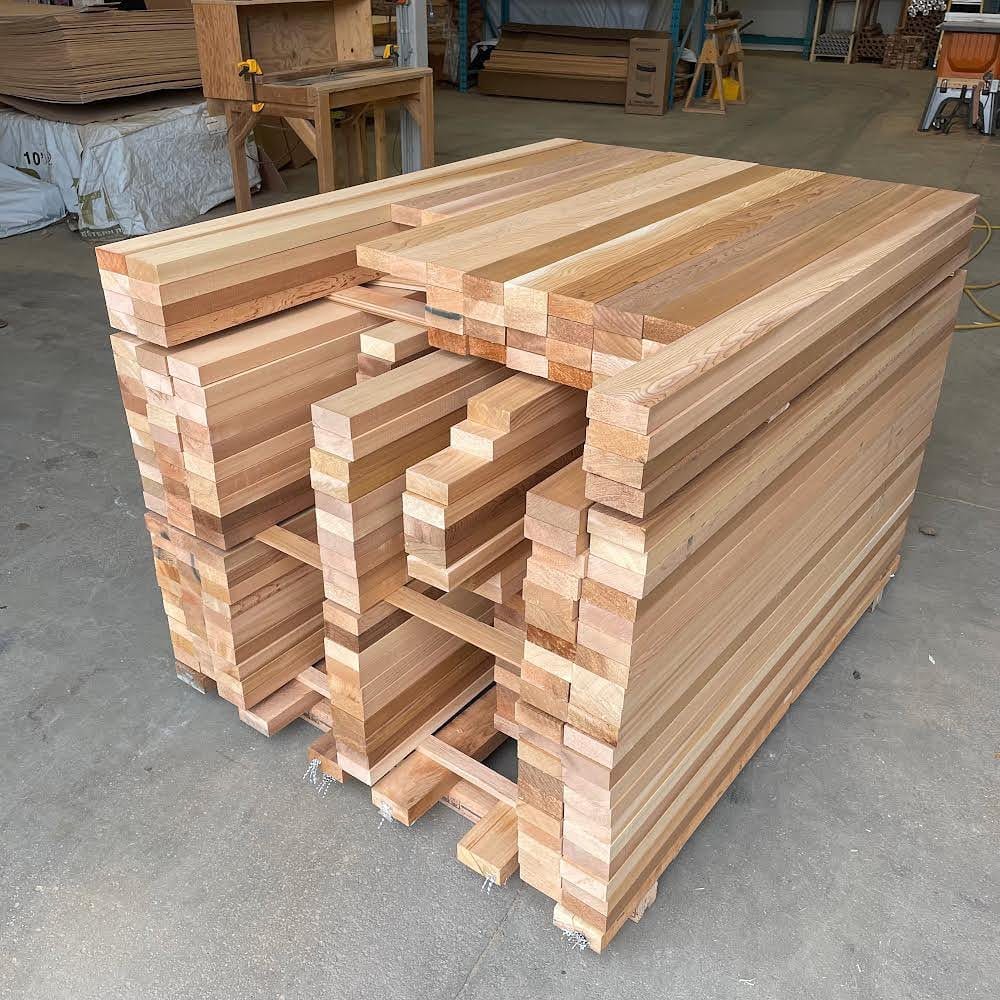
Sauna Lumber Has To Perform In A Harsher Environment
Sauna lumber has a harder job than ordinary interior lumber. It has to stay stable through repeated heat cycles, handle moisture, and remain comfortable against skin when the room is hot.
Inside a sauna, wood expands, contracts, dries, and reabsorbs humidity again and again. Small material issues become more noticeable in that environment. A board that looks acceptable in a garage or basement project may cup, gap, splinter, or release resin once it is exposed to sauna conditions.
This matters most in the places you touch. Benches, backrests, and wall boards near seating areas should feel smooth, solid, and comfortable. Knots, rough grain, sap pockets, and inconsistent milling are not minor details when your skin is in direct contact with the wood.
Good sauna lumber should be selected for:
- Heat stability
- Moisture resistance
- Smooth surface quality
- Low resin or sap risk
- Clean tongue-and-groove fit
- Comfortable contact with bare skin
- Long-term resistance to cupping, warping, and gaps
A sauna interior is simple in appearance, but demanding in use. Choosing lumber for that environment from the start helps the room heat better, age better, and feel better every time you use it.
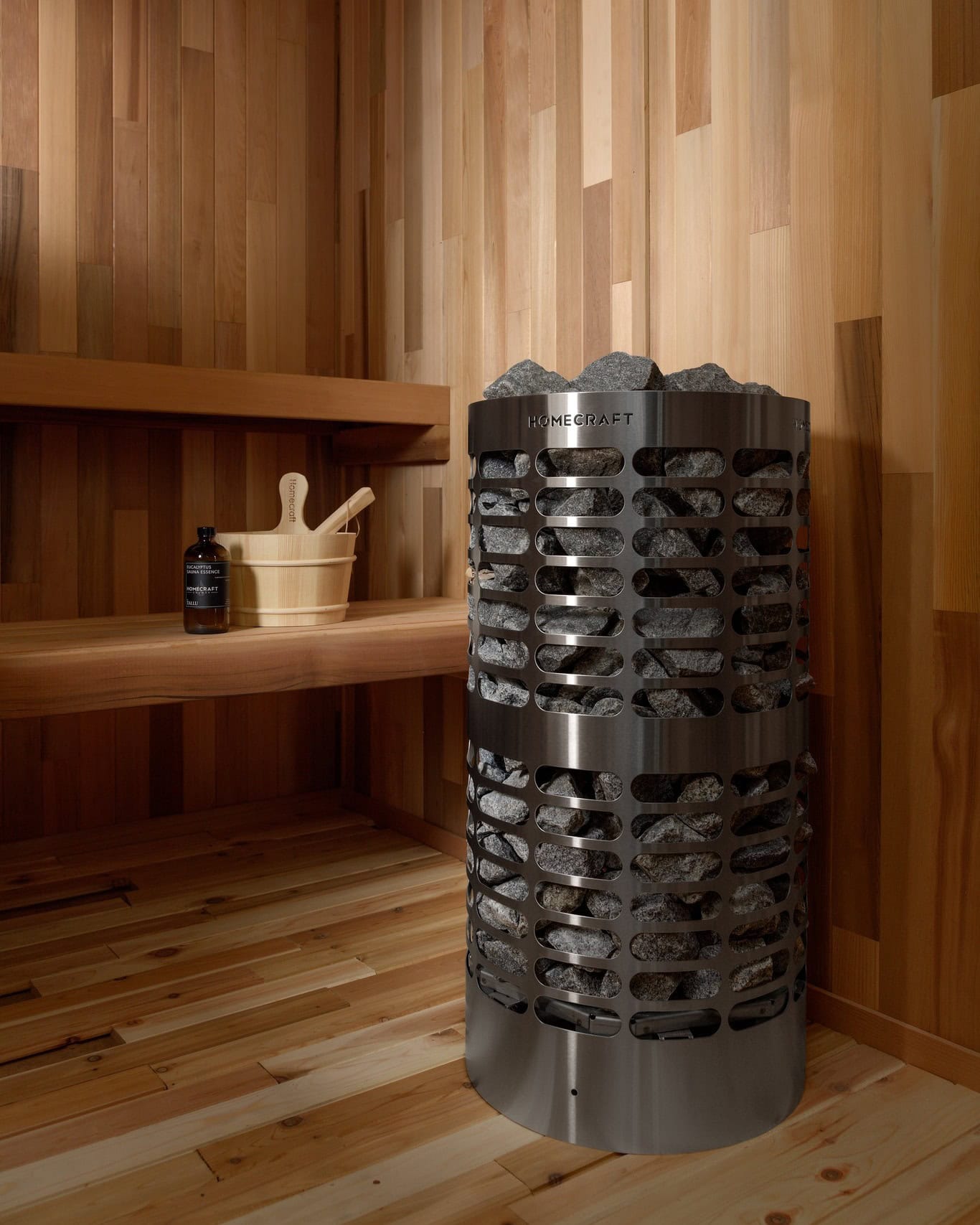
Why Clear Western Red Cedar Matters
Clear Western Red Cedar gives a sauna the balance of comfort, durability, and traditional character that ordinary interior lumber often cannot provide. It is light, stable, naturally aromatic, and well suited to a room that moves through repeated cycles of heat and cooling.
Its biggest advantage is how it feels in use. Cedar stays more comfortable to the touch than many denser woods, which matters on benches, backrests, and the lower sections of wall where people naturally lean or sit. Clearer boards also create a cleaner finish, with fewer visual interruptions and fewer problem areas to work around during installation.
Western Red Cedar offers several practical benefits:
- Comfortable feel in high heat
- Natural resistance to moisture and decay
- Pleasant, recognizable sauna aroma
- Stable performance with less movement
- Clean appearance with fewer knots
- Lightweight handling during installation
- Traditional look suited to indoor saunas
In a sauna, Clear Western Red Cedar helps the room feel warmer, cleaner, more comfortable, and more traditional from the first heat-up onward.

Where Big-Box Lumber Can Add Hidden Costs
Big-box lumber can look like the cheaper path until you start building with it. The extra cost usually appears in time, waste, rework, and the compromises needed to make general-purpose boards fit a sauna interior.
The hidden costs often include:
- Extra time spent sorting and selecting boards
- More waste from rejected or damaged pieces
- Additional cutting, trimming, and fitting
- Inconsistent board thickness or tongue-and-groove profiles
- More visible joints from shorter stock
- Rougher surfaces that need extra sanding
- Delays from sourcing trim, vents, benches, and accessories separately
- Possible replacement costs if boards move, gap, or become uncomfortable after use
When you factor in labour, waste, fit, and long-term performance, the lowest shelf price is not always the lowest project cost.
What A Home Sauna Kits Material Package Solves
A sauna comes together best when the materials are chosen for the room, not gathered one piece at a time. Once you account for cedar, bench material, trim, vents, vapor barrier, lighting, heater options, door style, and layout details, the value of a coordinated package becomes clearer.
At Home Sauna Kits, we build our DIY sauna kits around the details of your project. Your room dimensions, ceiling height, door location, bench requirements, and heater needs all affect the materials that belong in the final package. Instead of starting with loose lumber and making it work, you start with sauna-specific materials selected for the way the room will be built and used.
Our kits include Western Red Cedar interior materials, tongue-and-groove boards for the walls and ceiling, cedar bench components, foil vapor barrier, vents, trim, and sauna-rated lighting. Doors, heaters, controls, and other upgrades can be matched to the project depending on your layout and preferences.
The goal is simple: build once with materials chosen for the heat, the moisture, the room, and the people who will use it. A proper sauna should feel intentional from the first board to the first heat-up. When the materials work together from the start, the installation is easier to manage, waste is reduced, and the finished room is more likely to perform the way a traditional sauna should.