
A successful indoor sauna starts with the experience you want to create. Before you choose a room, order materials, or compare heaters, decide what “authentic” means for your build.
In a traditional sauna, heat comes from a properly sized sauna heater and a bed of stones. The room is lined with suitable wood, the benches place you where the heat is strongest, and ventilation keeps the air fresh during use. When water is added to the hot stones, the room produces löyly: the wave of heat and humidity that gives sauna bathing its traditional feel.
This guide walks you through the main decisions behind that kind of sauna. You will need to choose the right indoor space, prepare the room envelope, select durable sauna materials, size the heater correctly, plan airflow, and design the benches and finishing details around comfort and safety.
If each part is planned together, a DIY indoor sauna can feel natural, efficient, and built to last.
Choose and Plan the Indoor Space
The best indoor sauna location is the one you will actually use. A sauna tucked into an awkward corner of the house may look good on a floor plan, but daily use depends on simple things: easy access, a nearby shower, a place to cool down, and enough room to sit comfortably without feeling boxed in.
Basements, home gyms, garage interiors, cottage rooms, and bathroom-adjacent spaces can all make strong candidates. What matters is whether the space can support the build. You need room for framing, insulation, a foil vapor barrier, cedar lining, benches, ventilation, lighting, and a properly sized heater. You also need a practical path for electrical work, especially if you are using an electric sauna heater.
Start with the way you want to bathe. If the sauna is mainly for one person, a compact layout may be enough. If you want room for two people, family use, or the option to lie down, plan for longer benches and more open floor space. Do not size the room only by what can physically fit. A sauna that is too large takes longer to heat and costs more to finish, while a room that is too tight can limit bench height, heater clearance, and comfort.
A good indoor sauna feels intentional. It should be close enough to your routine that using it feels natural, with enough space around it for changing, showering, cooling down, and drying the room after use. Once you have the right location and layout, the rest of the build becomes much easier to plan.

Build The Room Envelope Correctly
The cedar you see is the finish, but the room behind it determines how the sauna performs. A well-built envelope holds heat, manages moisture, supports the heater, and gives the interior boards a stable structure to attach to.
Start with a properly framed room. The walls and ceiling should be square, solid, and ready for insulation before any sauna lining goes in. Pay close attention to the ceiling, where the hottest air collects. If the ceiling is under-insulated, the sauna may heat slowly, feel uneven, or demand more from the heater than necessary.
Insulation comes next. The goal is to keep heat inside the sauna rather than letting it drift into surrounding rooms or unfinished spaces. After insulation, install a foil vapor barrier on the warm side of the wall assembly. This layer helps reflect heat back into the room and helps protect the framing from warm, moist air. Seams, corners, and penetrations should be handled carefully because small gaps can become long-term performance issues.
Before the cedar goes up, confirm every hidden detail:
- Heater wiring and control location
- Lighting placement
- Vent locations
- Bench support blocking
- Door rough opening
- Heater clearances
- Any required electrical or building-code details
This is the point where careful planning saves frustration. Once the cedar tongue-and-groove is installed, changes become slower, messier, and more expensive.
Think of the room envelope as the sauna’s working shell. When the framing, insulation, vapor barrier, wiring, and blocking are planned together, the finished sauna feels tighter, heats more efficiently, and stands up better to years of use.

Select the Wood, Heater and Ventilation
The wood, heater, and ventilation system determine how the sauna feels, how efficiently it heats, and how well it holds up over time.
Choose wood that is made for sauna conditions. Interior boards need to handle heat, moisture, and repeated expansion without becoming uncomfortable to touch. Western Red Cedar is a strong choice for traditional indoor saunas because it is stable, durable, aromatic, and comfortable in high heat. Use tongue-and-groove boards for the walls and ceiling, with smooth, suitable stock for benches and supports.
Size the heater to the room. Start with cubic footage, then account for glass, exterior walls, ceiling height, and colder surrounding spaces. An undersized heater may struggle to reach temperature. An oversized heater can heat unevenly or cycle too aggressively. For most indoor residential saunas, an electric heater is the simplest and most practical option.
Plan ventilation before the cedar goes up. Good airflow keeps the room fresh, helps distribute heat, and allows the sauna to dry after use.
Key decisions include:
- Wood species and grade
- Wall and ceiling board profile
- Bench material
- Heater type and size
- Control location
- Sauna stone capacity
- Intake and exhaust vent locations
- Glass area and heat-loss impact
These choices work together. Good wood needs the right heat source, and the right heater needs proper airflow. When all three are matched to the room, the sauna feels balanced, heats efficiently, and performs reliably.
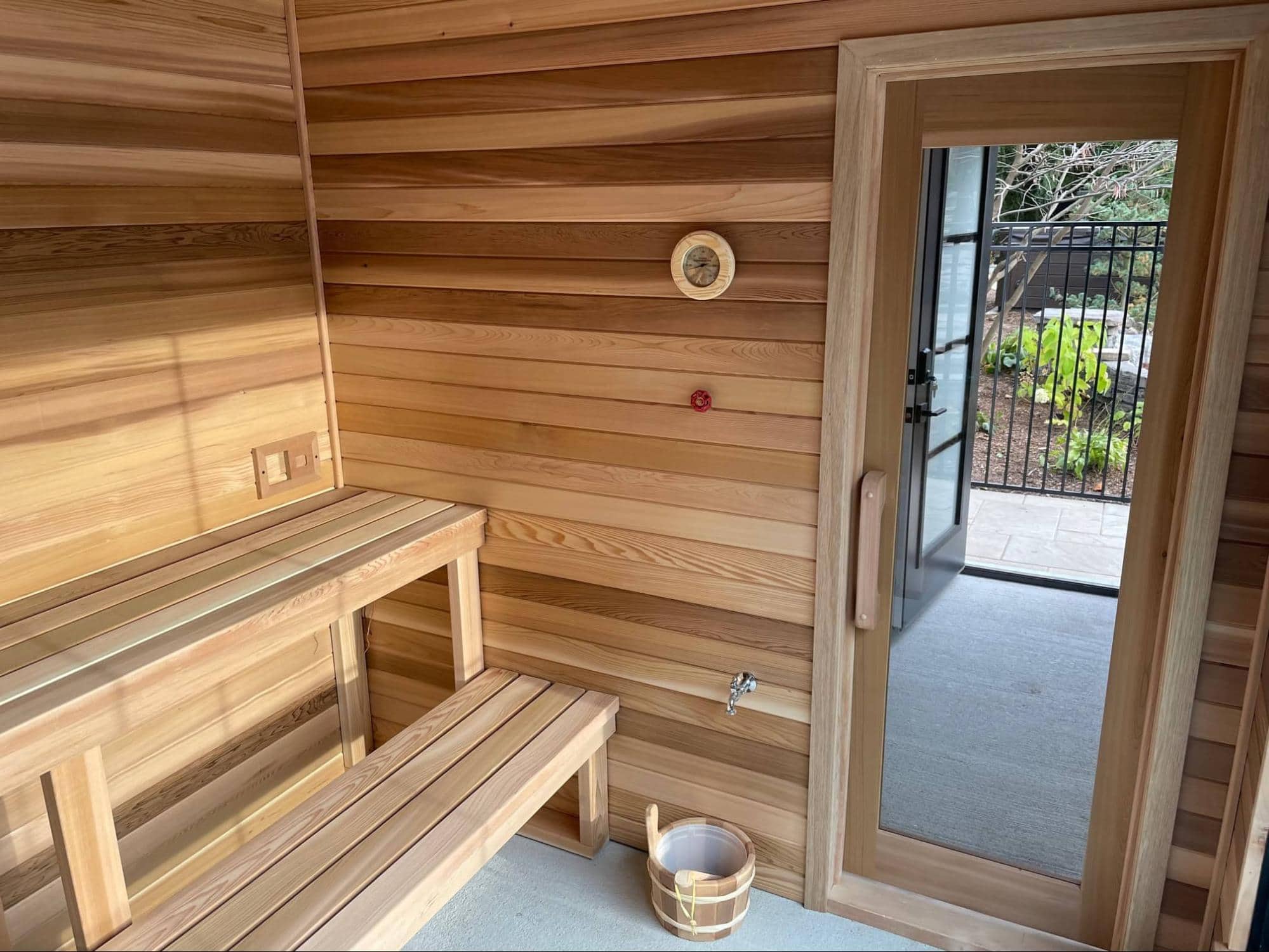
Plan Benches, Door, Lighting, And Accessories
The finishing details decide how comfortable the sauna feels in daily use. Benches, door placement, lighting, and accessories should be planned with the same care as the heater and cedar.
Start with the benches. Heat rises, so the upper bench is where the sauna experience is strongest. Make sure the layout gives you enough depth to sit comfortably, enough length to stretch out if desired, and safe clearance from the heater.
Choose a sauna door that suits the room. Glass can make a compact sauna feel more open, while a cedar-lined door gives a more traditional look. The door should open outward and be placed where it will not interfere with benches or heater clearances.
Keep lighting simple, warm, and sauna-suitable. Add practical accessories last:
- Heater guard
- Thermometer
- Bucket and ladle
- Backrests
- Vents
- Floor matting
A well-planned interior should feel easy to enter, comfortable to sit in, and simple to use.
Use A Sauna Kit To Simplify The Build
A sauna kit helps turn your plan into a coordinated build. Instead of sourcing cedar, bench material, trim, vents, doors, heater options, and accessories from separate suppliers, you can start with materials selected for your room and intended sauna layout.
At Home Sauna Kits, we build our DIY indoor sauna kits around your dimensions, ceiling height, bench layout, door location, and heater needs. Our kits use Western Red Cedar interior materials, with bench components, ventilation pieces, trim, and optional sauna doors and heaters matched to the project.
You still need a properly framed, insulated, and wired room, but we help simplify the sauna-specific side of the build. When your materials are planned together from the start, the project becomes easier to manage, easier to install, and more likely to feel right when the sauna reaches temperature.